The BBU’s Second Generation
Leading the BBU for most of the 40 years following have been Stan Zdonik and Gerry Katz, and more recently Tony Watt who became president as of October 2025, backed in recent years by a very active Board of Directors. The next month, in November, Tony announced that the organization’s Annual Heritage Award would be renamed the Stan Zdonik Award. As posted by Bluegrass Today on November 19, 2025, the first recipient of the award was Stan himself.63 Stan had been suffering from Parkinson’s disease for some time and had to withdraw from participation on the BBU board.
Tony Watt declared, “I cannot overstate the impact the BBU has had on my life, and Stan Zdonik has always been a huge part of that. I literally grew up as a child of the BBU. My dad, Steve, was a founding member and later ran sound for the concerts at the church with the rooster on top.
“Stan has been in my life for as long as I can remember, and he always loved introducing me to people by saying he’d known me since I was in diapers. It was an honor to be part of his wide circle of friends and to grow up surrounded by so many important people in our industry.
“I was overjoyed to join the BBU Board in 2011, where I had the privilege of watching Stan lead the organization with open ears and a steady hand. He has been a wonderful mentor to me – both within and beyond the BBU – and it’s no exaggeration to say that I wouldn’t be who or where I am today without his guidance.
“It’s my great honor to join with all the members of the BBU Board in carrying his legacy forward at Joe Val and beyond. We couldn’t be more grateful for all Stan has done for our community, and we hope that renaming this award in his honor will help cement his legacy for generations to come.”
Tony Watt can be considered part of the “third generation” of leadership as BBU approaches its 50th anniversary – even though, as the son of one of the original founders, Steve Watt, Tony himself is second generation BBU.
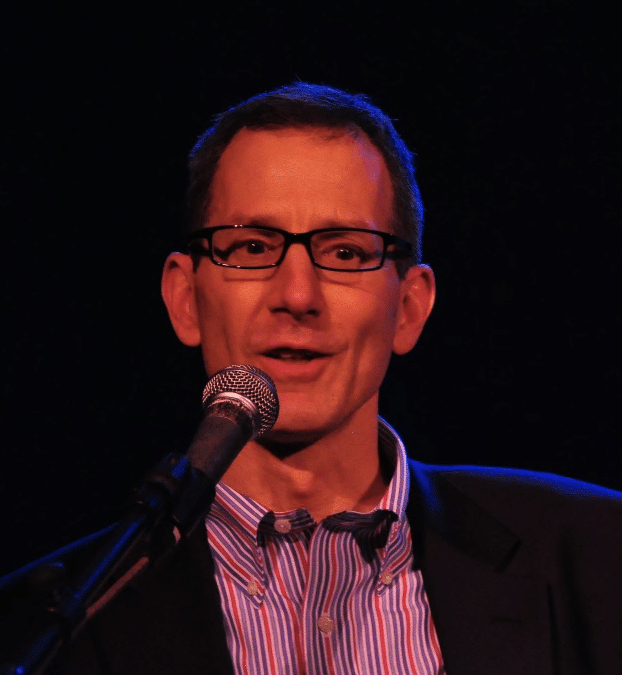
The “second generation” is probably best understood to have revolved around Gerry Katz joining with Stan in the mid-1980s. There have been a few dozen dedicated volunteers that have served on the BBU board over the many years. Though, to some, it seemed like something of a “Stan and Gerry show” for the period 1985 through 2000.
By the early 1990s, it does seem the second generation was secure – and fortunately still with Stan in a very active leadership role, as booking agent for the organization, and the master of ceremonies at concerts and events. Gerry and Stan shared the role of president of the BBU board through these years.
Let us hear from Gerry. He says he can’t really recall the first BBU show he attended, but given the frequency of visits at the time, likely a performance by The Dry Branch Fire Squad. He’s a native of Boston, born on the same date as Dudley Connell of the Johnson Mountain Boys – February 18, 1956.
“My mom was from Fitchburg and my dad was from Brookline. My folks moved from Boston to Newton in 1960. Music was always a part of those early years, predominately Classical music. My mom was a pianist (Chopin was a favorite), and there were regular visits to Symphony Hall as my dad’s family had a Saturday ticket subscription to the Boston Symphony Orchestra for over 75 years. My dad and I shared singing Gilbert and Sullivan operettas. I was exposed to folk music via my older brother, summer camp and general proximity to the local folk scene. My first record purchase was Herb Albert and the Tijuana Brass, so I’d say an eclectic music upbringing.
“Local radio played a huge part with expanding my music tastes. I was an ardent and passionate listener to WBCN, with Charles Laquidara and Maxanne Sartori opening doors to new and exciting artists. Rock, blues, Grateful Dead, New Riders of the Purple Sage, Allman Brothers, and the like. My lifelong interest in the stories behind the music likely were formed by these radio DJs and how they delivered the music to their on-air audience. Even then, I was interested in the history of the music.”64
He went through a reggae phase, too, after the movie The Harder They Come. An economics major, Gerry graduated from Brandeis in 1979, but never gone to the campus coffeehouse, Cholmondeley’s where Joe Val and the Bluegrass Boys occasionally performed. “In the early ‘80’s, I became disinterested in the current rock scene. Disco and the Punk scene held no appeal. Turning the dial, I stumbled across WERS, the Emerson College radio station, and discovered The Coffee House radio show.
“Somehow, I fell into listening to The Coffee House, hosted by Brad Paul, with Brian O’Donovan occasionally sitting in. I fell into the music – in love with the music – in a big way. Brad would play something, and he would give you the backstory. It’s like anything. You hear Newgrass Revival, and you want to find out where they came from, and you end up listening to Ralph Stanley and the Monroe Brothers and whatnot. Entirely different genres of music, but this was the same doors being opened that I experienced listening to WBCN a decade earlier.”
Through WERS he learned of the wealth of concerts and festival in the region. “I regularly attended performances at Passim, especially as WERS gave away free tickets to the Sunday afternoon concerts aired live by WERS.”
Gerry had gone to the Philadelphia Folk Festival with some friends while still in college, and by the mid-1980s started to go to Newport, Winterhawk, and the Cajun and Bluegrass Festival down in Rhode Island.
“There was a lot of music going on. I remember going to a BBU show and, of course, at the end of every show Stan [Zdonik] would say – as he was closing out the night – “we’d love to have you stick around and help us put away the chairs.” It was a good group of people, and I easily fell in. Helping with the chairs led into helping with the monthly mailings with Richie Brown, Stan, and Lou Tabaldi at Lou’s house. I quickly got into helping to promote the BBU activities.”
“I fell head over heels with bluegrass and the opportunity to meet these artists first-hand. That was probably ’87. This was a vibrant scene, with the BBU in full gear, and coffee houses throughout the region. If you look at the early BBU newsletters, you stumble across a wealth of listings for the different bands playing around. There were more folk coffeehouses than there are now. Every church had something going on. And bluegrass was a big part of the mix. Of course, there was a vibrant summer festivals scene. I think the first few years I went to seven or eight festivals over the summer. I fell into that community. Strawberry Park in late May and going right through Thomas Point Beach in early September. I developed friendships with all these different people who were involved in music.
After college, Gerry worked in the tire and automotive industry as part of his family’s business, The Merchants Tire Company. Working at various roles though the years, the business was not a passion. That passion turned out to be bluegrass and roots music.
“By the fall of 1988, I was well along with my involvement with the BBU, helping to promote and produce concerts taking place on Sunday evenings at the First Church Congregational, in Cambridge. Stan was doing the booking, I handled the promotion, and we got together to do the monthly mailings. An expanding group of fresh faces were in the mix, including Deb Silva, Jim McDonough, Gail and Allen Wiegner, and Keith Rollag. Richie Brown and Ken Irwin were still on board for the monthly gatherings to fold, stamp and label the newsletters. Judy Alland came in around that time and took over as newsletter editor, taking that effort to a new level. And about that time, Dustin Clampitt brought us into the internet age with email lists, and NEBG list serv.
“By ’89, I started attending the International Bluegrass Music Association annual convention. The BBU was well represented by Stan Zdonik, Fluffy Bergman, Dustin Clampitt, and me. For many years thereafter we’d host hospitality events and artist showcases. In Owensboro, Louisville, Nashville. The BBU continues to make a large presence at the IBMA event, now with a fresh set of Board members and the tradition of hosting these showcases continues. IBMA was a great place to make contacts, learn about the business of bluegrass, source new bands, sponsors, and always served as the jumping off point for band bookings for the year. I can’t say enough about how the IBMA convention helped with the growth of the BBU.
Gerry was able to bring some of his business and organizational experience to the Boston bluegrass scene. “Early on, as I was involved with the BBU, I said, ‘We’ve got to promote this better, do a better job of getting out the word about the shows.’ That’s really where I excelled and carved out my niche within the BBU. Stan was doing the talent buying. Together we were figuring out when we’re going to do the shows – we were doing the shows at the church at that point – telling the story and crafting the press releases. Developing contacts with the print media including Steve Morse and Scott Alarik at the Boston Globe, Daniel Gewertz at the Boston Herald, and Ed Symkus at the Metro News, plus regular contact with the region’s bluegrass and folk music DJ’s. Crafting a press release which provided ready copy that included the importance of the artist or event, and sharing this with these contacts was key to our success. From that came the newsletter and other resources to convince people to come to the shows.”
Gerry later added, “Stan was the public face of the BBU, but I had a significant hand at moving things along and growing the quality and depth of our offerings – the BBU concert series in Lexington, bringing JV Fest into our portfolio, first as a single-day event, and then a weekend-long wintertime event. I handled pretty much everything save for the booking and the MC work. PR work and relations with print and radio media for our concerts and festival was a significant undertaking, but it paid off with the successful growth of these events. That said, as the number of activities grew, we started to attract several fresh faces to the BBU board. That in turn further raised the quality of our events and brought new ideas to the table.
“Personally, I also want to recognize the relations with Rounder Records. Ken, Marion and Bill provided access and insight to bands we needed to hire and showcase, and the PR team of Brad Paul, Susan Piver, JJ and Jen Rassler, and especially Brad San Martin all helped teach me the art of promotion.”65
He also wanted to recognize Ol’ Sinc and Cousin Lynn at Hillbilly at Harvard for expanding his knowledge of country and bluegrass music. And the door was always open for Saturday visits to shill BBU shows on the air.
Gerry recalls 1993 as a pivotal year in transitioning from the shows at the church to a larger venue in Lexington – at Museum of Our National Heritage on Marrett Road. With over a hundred shows over the years at the Church, there was now a need for a larger venue.
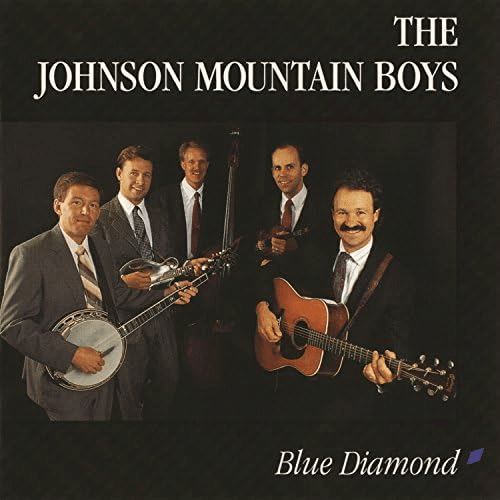
He recalls, “JMB was one of the great bands that drew me into bluegrass in the mid-1980’s. They performed regularly at summer festivals in the area. Both the BBU, the North River Bluegrass Association managed by Cathy Howland, and the Connecticut Friends of Bluegrass managed by Glenn Huffer, along with folks at Rounder all had a hand at breaking the band as they came on the scene in the early 1980’s and introducing them to area audiences. JMB were a huge hit with our patrons, with their young and enthusiastic take on traditional bluegrass. Fast forward to 1993, the band had retired but got back together to record and tour behind the Blue Diamond release (Rounder 0293, released in February 1993). We scheduled a show at First Church in Cambridge, and due to demand, had to add a second show that night. Given the love for the band, most of the audience for the first show stuck around for the second show.
“That was likely the impetus to start looking for a larger venue for our concerts. The church had seating for 150 or so, and we were seeing big demand for the events. I don’t recall who sent me in the direction of the venue, but I reached out to the Executive Director of the National Heritage Museum in Lexington, site of the regional headquarters of the Masonic Order, and a 400-seat performance space. In short order, I convinced Executive Director that bluegrass, an original American music form, was a perfect fit with their mission to celebrate American culture. In the Spring of 1994, we tried out the Museum, and following a successful show with Dry Branch Fire Squad and Frank Wakefield, permanently moved our concerts to the new venue. In 1995 we hosted a full slate of shows at the Museum featuring Tony Trischka and Skyline, Lou Reid and Carolina, along with James King.”66
The second generation was well underway – with Stan still involved. Not long after BBU had enjoyed its 20th anniversary, Bluegrass Unlimited marked the occasion in a 1997 article by Elijah Wald. The organization had been stable, but not growing. “Zdonik kept seeing the same faces, month after month, and, while they were enough to keep things going, he couldn’t see any new energy coming in. That is, until Katz came on the scene in the late 1980s.” Stan had suggested that he sometimes considered packing it in, but he knew that Joe Val would have wanted him to keep going. Joe “always used to call me ‘the Shepherd.’” Stan said Gerry Katz had been a “savior.” 67
“Katz brought more than just an injection of new enthusiasm. [With some experience in marketing] he directed his energies towards reaching out to the local media, going on radio shows to promote concerts and sending out press releases to the newspapers.”68
In the early 2000’s BBU’s board was strengthened with the additional members in Nancy Harrowitz, August Watters, and Denise Jarvinen. Their focus was on education and the BBU, founded as an educational institution, greatly expanded their outreach programs. Initially, a Kids Academy was added to the annual Joe Val Bluegrass Festival. This featured free, professional instruction over the three days of the festival and culminated with a Sunday performance on the Main Stage.
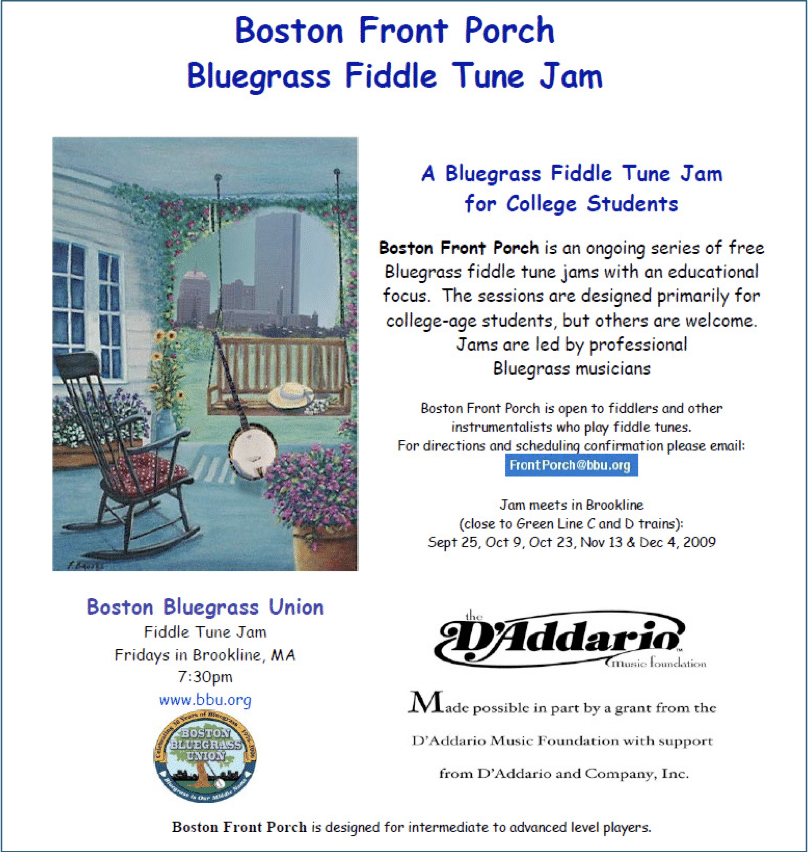
Soon after, the education team started a Boston Front Porch program for college students, and the Kids Academy expanded outside of the Festival with regular gatherings. Thanks go to Denise Jarvinen for developing these programs.
Footnotes –
- John Lawless, “Boston Bluegrass Union announces the Stan Zdonik Award,” Bluegrass Today, November 19, 205. https://bluegrasstoday.com/boston-bluegrass-union-announces-the-stan-zdonik-award/. The announcement declared, “Stan recently transitioned off the BBU’s Board of Directors, and as part of this change, the BBU wishes to recognize his extraordinary contributions in helping lead the organization in one way or another for the past 50 years. Stan was the founding President of the BBU and served in that role for most of its history. Beyond Boston, he also led the International Bluegrass Music Association (IBMA) as Board President during one of its most challenging periods – the height of the Great Recession – and was later honored with the IBMA’s Distinguished Achievement Award for his decades of service to bluegrass music. The BBU is profoundly grateful for all that outgoing President Stan Zdonik has done for our organization and the broader bluegrass community.”
- Unless otherwise indicated, all direct quotations from Gerry Katz come from an interview with the author on November 20, 2025.
- Gerry Katz, email to author, December 7, 2025.
- Gerry Katz, email to author, December 7, 2025.
- Elijah Wald, “Boston Bluegrass Union.” Bluegrass Unlimited, July 1967: 31.
- Wald